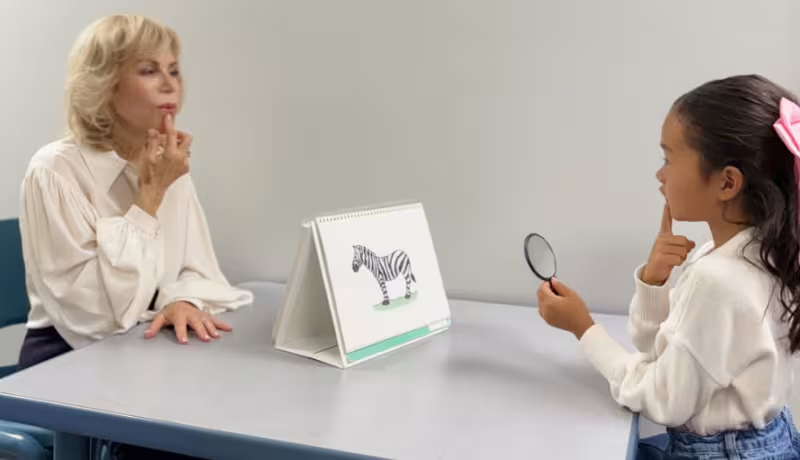
We work with clients experiencing difficulties in various areas of speech and language, including:
Articulation and Phonology
- Articulation is the physical ability to produce speech sounds correctly by coordinating the lips, tongue, teeth, and palate.
- Phonology is how sounds work together in a language. Phonological speech errors happen when a child has trouble using the rules for sounds. As a result, they often replace or leave out sounds in words. Example: Saying “tat” instead of “cat” or “pider” instead of “spider.”
Expressive Language Skills
- Expressive Language is the ability to express thoughts and ideas clearly which results in communicating effectively with others.
Receptive Language Skills
- Receptive language is the ability to understand and process what is heard.
- Most young children understand more than they can express. Receptive skills are crucial for following directions, answering questions, and participating in conversations.
Speech Fluency (Stuttering)
- Stuttering affects the smooth flow of speech. While occasional disfluencies are common, frequent interruptions can impact communication significantly.
Voice and Resonance
- Voice disorders affect the vocal cords and can cause issues like hoarseness or loss of voice.
- Resonance relates to how sound vibrates in the oral, nasal, and throat cavities. Problems here can affect voice quality.
- Common causes in children include vocal strain from yelling, excessive talking, or throat clearing.
Cognitive-Communication Skills
- These skills involve attention, memory, reasoning, and problem-solving needed for effective communication.
- Difficulties can be developmental or result from injury, stroke or degenerative diseases.
Social (Pragmatic) Communication Disorders
- Children with social communication disorders struggle with the social use of language.
- This may occur alongside Autism or independently.
- These challenges can lead to frustration and behavioral issues when children cannot express their needs effectively.
Our Approach
An effective therapist starts by truly listening to understand each child’s unique story. This deep, empathetic listening helps uncover what lies beneath surface behaviors, fostering trust and a strong connection between the therapist and child.
Lisa works closely with your child to build essential skills and teach strategies that support their communication needs.